STUDIO RENTAL VS. PRODUCTION SERVICES: WHAT IS THE DIFFERENCE AND WHICH DO YOU NEED?
When you are planning a production in Tampa Bay, one of the first decisions is whether you need a studio rental, a full production service, or some combination of the two. The distinction matters for budgeting, scheduling, and how you staff the project. This article clarifies what each model typically includes, what the differences mean in practice, and how to decide which approach fits your production.
Quick answer: Studio rental provides the physical space, power, and infrastructure. Production services add crew, cameras, technical direction, and delivery. Many productions use both: they rent the studio and either bring their own crew or hire production services separately. Confirm with the studio exactly what is included in a rental before assuming anything about labor or equipment.
What Studio Rental Typically Includes
A studio rental gives you access to the physical facility for a defined period.
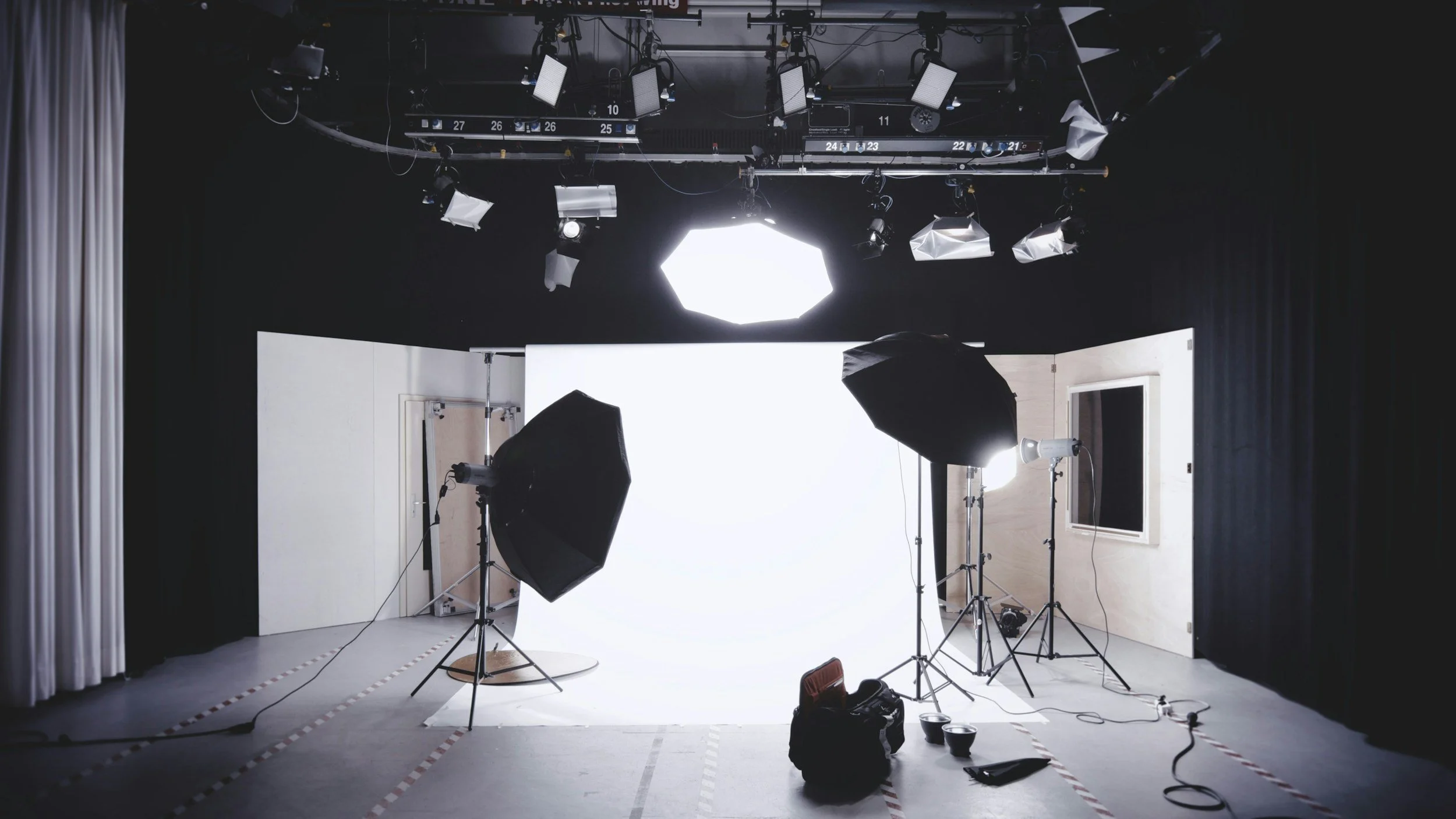
What is included in a basic rental varies by studio but generally covers the stage floor, overhead lighting grid access without necessarily providing fixtures, power panels, support areas such as green rooms and restrooms, parking, and security during the rental period.
What is not automatically included in a basic studio rental: cameras, camera operators, lighting fixtures, a lighting director, a technical director or engineer, audio recording equipment, a sound engineer, post-production, streaming or transmission services, or any other crew position or production service.
If a studio includes any of these services in a base rental, confirm in writing what is specifically provided and at what staffing level.
What Production Services Typically Include
A full-service production company manages the complete production workflow from concept through delivery.
A production company typically provides the project plan, crew, equipment, locations or studio booking, shoot management, and delivery of the final asset. The client specifies the outcome and the production company manages how to achieve it.
Some studios operate as production companies. Others are stage-only facilities that do not supply production services. Many fall in between: primarily rental facilities that offer optional in-house services as add-ons.
The Hybrid Model: Stage Plus Outside Crew
The most common arrangement for professional productions is a hybrid: rent the studio and bring your own crew or hire freelance production support separately.
This model is standard in commercial, broadcast, film, and event production. The agency, brand, or production company handles creative and crew. The studio handles infrastructure. This separation gives the production team full control over crew selection, equipment, and process while leveraging the studio’s infrastructure rather than building or renting it from scratch.
For this model to work, the studio must explicitly support outside crews. Not all studios do. Confirm before booking whether you may bring your own camera operators, gaffers, audio engineers, and production support staff without restriction.
When Full-Service Production Makes Sense
Full-service production is the right call when the client does not have a production team or does not want to manage crew.
A brand launching a product video without an in-house production team is a candidate for full-service production. A corporate communications department commissioning a studio interview series is another. In these cases, the client specifies the deliverable and the production entity manages the logistics.
Full-service production generally costs more than a bare studio rental because it includes all labor, equipment, and project management. The cost is appropriate when those services are genuinely needed.
When Studio Rental Is the Right Model
Studio rental makes sense when the production team already exists and needs infrastructure, not management.
An advertising agency with an established crew producing a commercial series rents the studio, not the production service. A network broadcasting a live program brings its own technical team and needs a stage and control room, not a production company. A digital studio producing weekly video content for a recurring brand rents the space and handles production internally.
In these cases, paying for full production services adds cost without adding value because the client already has what the production service would supply.
Optional In-House Services as a Middle Path
Many studios offer optional in-house services that fall between bare rental and full production.
A studio engineer who manages room levels and technical connectivity is not the same as a full production team. A preferred crew list that the studio provides on request is not the same as a production company taking ownership of the deliverable. These optional add-ons allow a production to use studio-side support for specific technical functions while retaining full control of the production process.
This is how Shear Media Studios operates. The studio is built primarily for outside production teams. Optional in-house support is available when needed: engineers, production support, and technical services for livestreaming, transmission, and line-cut productions. These are additions, not the default.
Shear Media Studios
Shear Media Studios is an approximately 15,000 sq. ft. production studio in St. Petersburg serving Tampa, Clearwater, and the greater Tampa Bay area. Studio A and Studio G are both available for rental by outside production teams. In-house technical support is available when needed.
Contact Shear Media Studios to confirm what is included in a rental for your specific production type and to discuss any optional in-house service additions.
For broader context on evaluating a studio before booking, see how to choose a production studio in Tampa Bay. For outside crew policies specifically, see bringing your own production crew to a Tampa studio.
FAQ
What is the difference between renting a studio and hiring a production company?
Renting a studio provides the physical space and infrastructure for your production. Hiring a production company provides the crew, equipment, and project management needed to complete a deliverable. Many productions combine both: they rent the studio and either bring their own crew or hire production support separately. Confirm exactly what any studio rental includes before assuming labor or equipment is part of the package.
Does a studio rental include cameras and crew?
A basic studio rental typically does not include cameras, operators, or production crew. It provides the stage, power, and support areas. Some studios offer cameras, crew, or technical services as optional add-ons. Confirm the specific inclusions when inquiring to avoid assumptions that affect your production budget.
Can I bring my own crew to a rented studio in Tampa Bay?
Many studios support outside crews. Confirm explicitly before booking. Some studios operate as production companies and prefer to supply labor and equipment. Shear Media Studios is built for outside teams and welcomes productions that bring their own crew, cameras, and equipment.
What does in-house studio support include at Shear Media Studios?
In-house support at Shear Media Studios is available as an optional addition to a rental and may include engineers, production support, and technical services for livestreaming and transmission productions. These are separate from the base rental and are not automatically included.
When should I choose a full-service production company instead of a studio rental?
A full-service production company makes sense when you do not have a production team and need someone to manage crew, equipment, and delivery. If you already have a production team and need infrastructure, a studio rental with optional support is typically more cost-effective.
How do I know if a studio’s in-house services are the right fit for my production?
Contact the studio and describe your production type, crew size, technical requirements, and deliverables. A studio that regularly supports the type of production you are planning will be able to clarify what its services include and where outside crew or equipment is typically needed.