Why Productions Are Moving Away From Traditional Studio Rentals
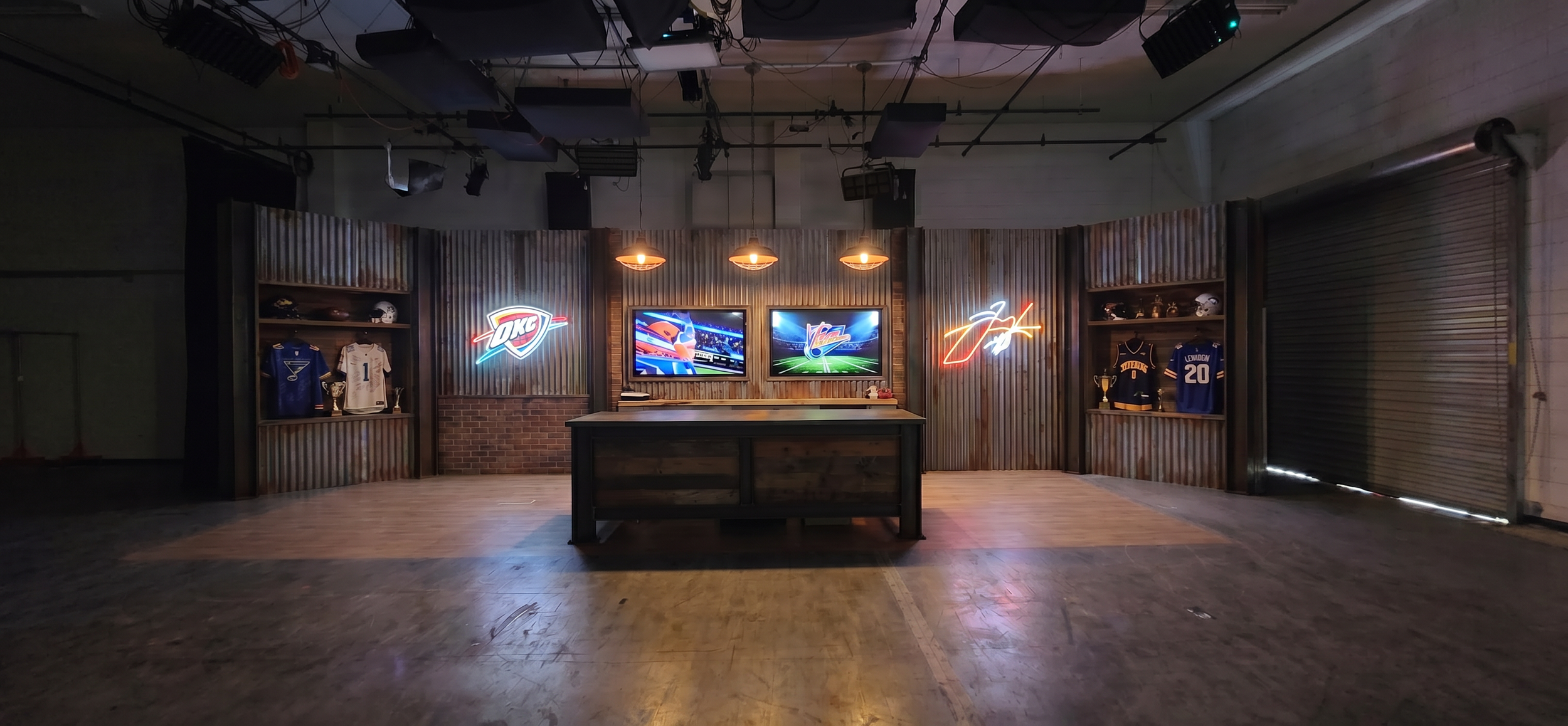
Shear Media Studios - Studio G Concept Set Render
The Rise of the Production Home
For years, most productions rented studio space one day at a time.
Load in. Build a set. Shoot. Tear it down. Repeat next week.
Today, more productions are looking for something different: a production home.
Whether it's a weekly sports show, corporate broadcast, livestream series, podcast network, branded content channel, or recurring production, rebuilding from scratch every week costs time, money, and creative momentum.
That's why production teams are increasingly looking for studio facilities that offer more than four walls.
What Is A Production Home?
A production home is a facility where productions can operate consistently over time.
Instead of simply renting a room, productions gain access to the infrastructure needed to create content efficiently and repeatedly.
This often includes:
Large studio space
Control room access
Multi-camera production capabilities
Streaming infrastructure
Production offices
Green rooms
Hair and makeup rooms
Loading access
Set storage
Long-term set builds
The goal is simple: spend less time rebuilding and more time creating.
Why Recurring Productions Need Dedicated Studio Space
Many productions today aren't one-time projects.
They are:
Weekly sports shows
Corporate communication programs
Town halls
Livestream events
Podcast networks
Branded content series
Sponsor-supported programming
These productions benefit from maintaining a consistent look, workflow, and environment.
A dedicated production space creates consistency for viewers while reducing setup time and production costs.
The Importance of Control Room Integration
Modern productions often require more than cameras and lights.
A professional control room allows teams to manage:
Multi-camera switching
Graphics playback
Streaming workflows
Remote guests
Program recording
Audio routing
Client monitoring
Communications between production spaces
For many organizations, having a connected control room eliminates the need for production trucks, temporary control systems, and outside infrastructure.
Remote Production Is Here To Stay
One of the biggest changes in production over the last few years has been the growth of remote workflows.
Directors, producers, agency teams, and clients no longer need to be physically present to participate.
Today, productions routinely involve team members working from New York, Los Angeles, Chicago, Atlanta, London, and beyond.
The ability to route feeds, monitor productions remotely, and collaborate in real time has become a critical part of modern content creation.
Why Tampa Bay Productions Need Flexible Studio Space
As Tampa Bay continues to grow as a production market, producers are looking for facilities that can support multiple types of content from one location.
Commercials.
Corporate video.
Broadcast productions.
Live streaming.
Podcasts.
Events.
Sports media.
Long-form content.
The most effective studios are no longer built for a single purpose. They are built to adapt.
Studio G at Shear Media Studios
Studio G was designed with this flexibility in mind.
Located inside Shear Media Studios' approximately 15,000-square-foot production facility, Studio G supports everything from live broadcasts and recurring shows to events, livestreams, custom set builds, and large-scale content production.
Combined with centralized control room capabilities, production support spaces, podcast studios, green rooms, and additional studio environments, Studio G provides productions with something many facilities cannot:
A place to return week after week.
More than a studio rental.
A production home.