Broadcast Studio Rental in Tampa Bay: Control Room, Transmission, and Technical Infrastructure
A broadcast studio is not simply a stage with cameras. A facility that supports professional broadcast production has a dedicated control room for real-time switching, transmission infrastructure for live delivery, multi-camera capability with coordinated audio management, and technical staffing that knows how to run a live program. This article covers what to look for when renting a broadcast studio in Tampa Bay and what the facility needs to provide.
Quick answer: A broadcast studio rental in Tampa Bay should include access to a dedicated control room for multi-camera switching, broadcast-grade transmission capability, technical engineering staff for live productions, a stage with controlled lighting for on-camera output, and the connectivity infrastructure to support live delivery to your platform or network. Confirm all specifications before booking.
What Separates a Broadcast Studio from a Standard Production Stage
Any stage can host a camera. Only a broadcast studio has the infrastructure to manage what happens after the camera starts rolling.
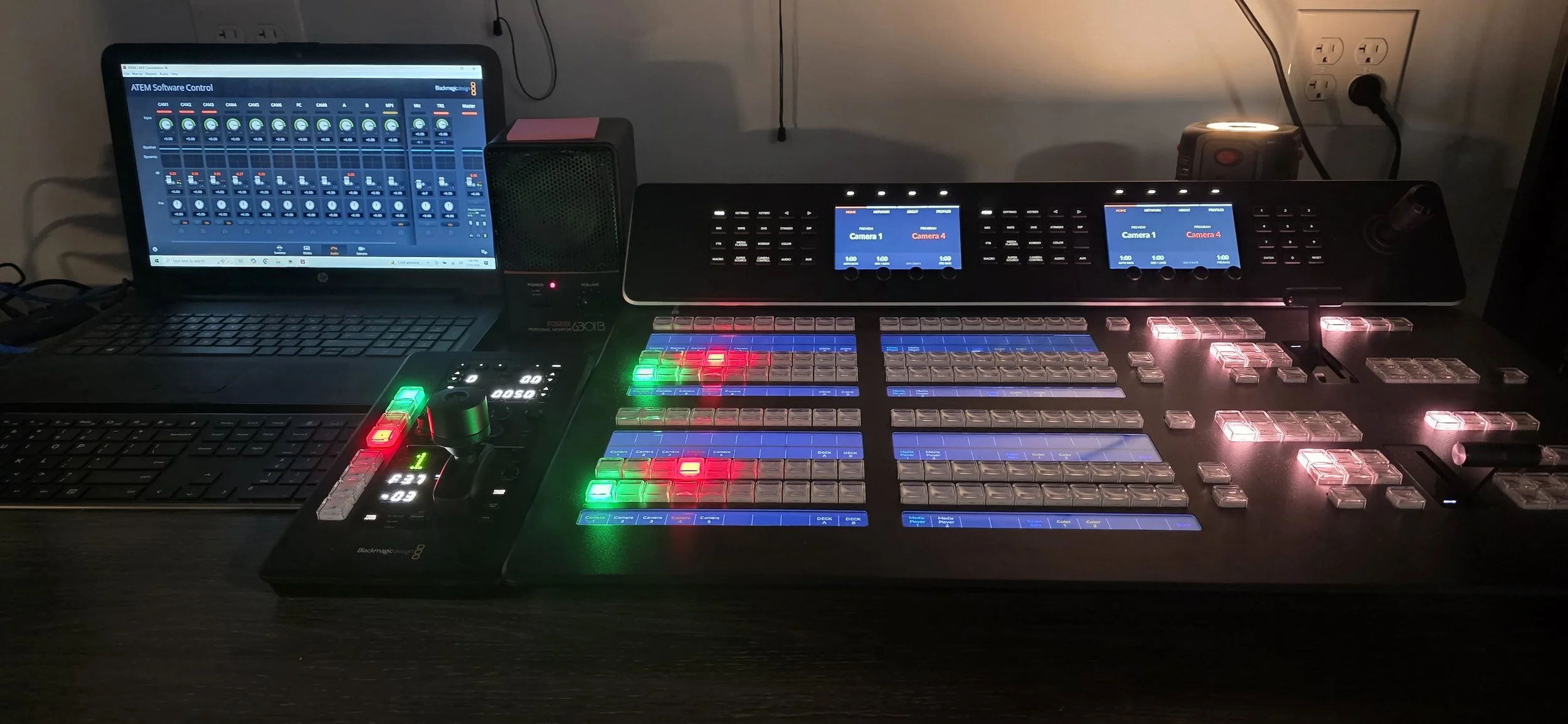
A broadcast studio has a control room where a technical director monitors and switches between multiple camera inputs in real time. It has transmission infrastructure to deliver the program signal to a satellite uplink, a streaming platform, a cable head-end, or a corporate network simultaneously with production. It has coordinated audio management across multiple microphone inputs and remote feeds. And it has the technical staffing to run all of those systems without interrupting the on-camera talent or the live program.
A standard production stage is the right tool for recording content that is edited and delivered later. A broadcast studio is the right tool when the product is a live program.
Control Room Capability
The control room is the operational center of a broadcast production.
Key control room capabilities to confirm: the number of video inputs the switcher can handle simultaneously, whether the control room supports multi-format inputs (HD, 4K, remote video calls), whether graphics and lower thirds can be injected into the live program, how audio from multiple sources is managed and monitored, and what the latency profile looks like for remote guest integration.
A control room that supports six camera inputs is very different from one that handles two. Confirm the specifications against your production's requirements before booking.
Transmission and Signal Delivery
A live broadcast program needs to go somewhere after it is produced.
Confirm what transmission options the studio supports: internet-based streaming platform delivery (YouTube Live, Vimeo, custom RTMP), fiber or satellite uplink for broadcast network delivery, corporate network distribution for internal events, or multi-destination simultaneous delivery to multiple platforms.
Each delivery method has different technical requirements. A studio that supports streaming to YouTube is not necessarily configured for satellite uplink. Confirm that the studio's transmission capability matches your specific delivery requirement.
Technical Staffing for Broadcast Productions
A broadcast production cannot run without people managing the technical systems.
A technical director operates the control room switcher and manages the live cut. An audio engineer manages microphone levels, remote guest audio, and program audio monitoring. A transmission engineer monitors the outgoing signal quality and manages platform delivery. These may be one person, two people, or a larger team depending on the complexity of the production.
Confirm whether the studio provides technical staffing as part of a broadcast rental, whether staffing is an optional add-on, and what positions are covered.
Stage Requirements for Broadcast Output
The stage environment for a broadcast production has specific requirements that differ from a standard recording session.
Lighting needs to be consistent for the full duration of the program without adjustment. The camera configuration needs to be locked and stable before the program begins. Audio must be managed cleanly across all microphone inputs with no bleed or level variation. The stage needs to be cleared of non-essential personnel when the program is live.
Confirm that the studio has experience managing a stage for a live broadcast production and that the workflow for going live is established before your production arrives.
Remote Guest Integration in Broadcast Productions
Live broadcast programs frequently include remote guests, remote reporters, or remote locations.
The control room needs to receive the remote guest's video and audio feed as a clean input, manage it separately from in-studio audio, and switch to it smoothly on cue. The remote guest needs to be able to hear the in-studio host clearly during their segment.
Confirm the studio's remote guest capability, the maximum number of simultaneous remote feeds the control room can handle, and which platforms or encoder formats the studio's system supports.
Shear Media Studios Broadcast Capability
Shear Media Studios is an approximately 15,000 sq. ft. production studio in St. Petersburg serving Tampa, Clearwater, and the greater Tampa Bay area. The facility includes a control room for multi-camera broadcast productions. In-house engineering and technical production support for live broadcast events are available when needed.
Studio A at approximately 2,800 sq. ft. is the primary stage for controlled broadcast environments including news-format productions, interview programs, corporate broadcasts, and livestream events. Studio G at approximately 5,800 sq. ft. handles larger broadcast formats with higher crew counts and event-scale productions.
Contact Shear Media Studios to discuss your broadcast production requirements, control room specifications, and technical staffing for your event dates.
For an overview of studio evaluation criteria, see how to choose a production studio in Tampa Bay. For multi-room and corporate broadcast formats specifically, see multi-room corporate broadcast production.
FAQ
What makes a studio a broadcast studio rather than a standard production stage? A broadcast studio has a dedicated control room for real-time multi-camera switching, transmission infrastructure for live delivery, coordinated audio management across multiple inputs, and technical staffing to run a live program. A standard production stage provides floor space and power for recording, but does not have the control room or transmission infrastructure for live broadcast output.
What should I confirm when renting a broadcast studio in Tampa Bay? Confirm the control room's input capacity, transmission options and delivery formats, technical staffing availability, stage lighting consistency for live output, and remote guest integration capability. Get these specifications in writing before booking.
Can Shear Media Studios support live broadcast transmission in Tampa Bay? The facility includes a control room and in-house technical support for broadcast and livestream productions. Contact Shear Media Studios directly to confirm transmission specifications and available delivery formats for your production.
Does a broadcast studio rental include a technical director and engineering staff? In-house technical engineering and broadcast support are available at Shear Media Studios as optional additions to a rental. Contact Shear to confirm what staffing is available for your production dates and format.
What is the difference between a broadcast studio and a livestream studio? In practice, the terms overlap. A livestream studio typically refers to internet-based live streaming output. A broadcast studio may support both internet streaming and traditional broadcast delivery (satellite, cable, fiber). The control room capability and transmission infrastructure are what distinguish a full broadcast facility from a basic streaming setup.
How much does a broadcast studio rental cost in Tampa Bay? Broadcast studio rental rates depend on the stage, control room access, technical staffing, transmission requirements, and production duration. Contact Shear Media Studios directly for current rates and production packages.